The Spirit of Delta
Last week I had the opportunity to attend a leadership seminar at the Delta Airlines Museum in Atlanta, GA. One of the speakers was Ed Bastien, the CEO of Delta Airlines, who is regarded as one of top CEOs in the country. I was impressed with his humility and candor as he shared leadership lessons he had learned over the course of his almost 30 year career at Delta.
One particular story that he shared really resonated with me. In the spring of 1982 the airline industry was shaken up by deregulation, sending many airlines into financial turbulence. And after 35 years of profitability, Delta posted it’s first loss. An article was published in the newspaper criticizing Delta for increasing employee pay during a time of financial crises. Three flight attendants saw the article and wanted to do something to stand up for their employer.
There was a new plane coming out - the Boeing 767, and they knew that Delta Airlines could benefit from having one of them. So they came up with the idea, that they should buy the plane for the company. Diane Carvelli, Ginny Oxford, and Jean Owens met with the CFO to find out how much a plane costs. When he told them it would be $30M, they were relieved, because they actually thought it would be more than that. They went to work raising money from over 18,000 employees and retirees who contributed through voluntary payroll deductions and personal donations and raised the $30M in three months.
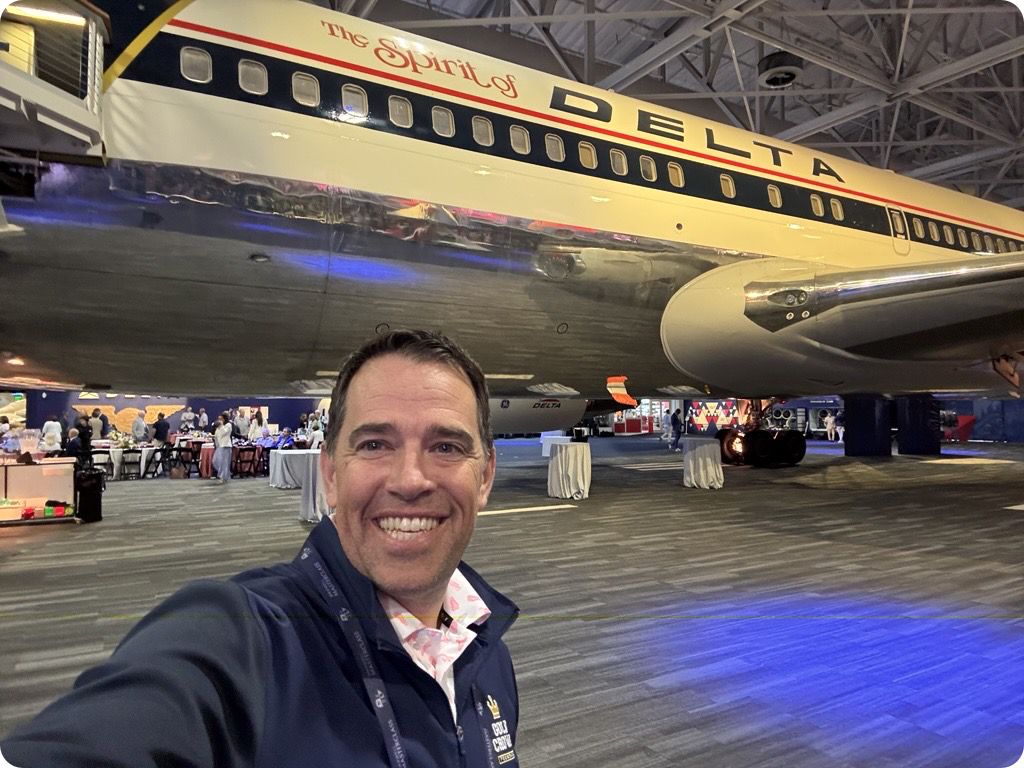
The Spirit of Delta airplane at the Delta Airlines Museum in Atlanta, GA
That plane, called the “Spirit of Delta” is now a fixture in the museum. What started as an idea from three flight attendants became one of the most remarkable displays of employee commitment in corporate history.
I was impressed by this story and reminded of the power of a committed team. When people are proud of where they work and feel cared for, they will do incredible things, especially during difficult times.
Ed talked about the fact that character is not forged during a crisis, character is revealed during a crisis. And I think the same is true of culture.
When times are good, it's easy to say you have a great culture. Business is growing, people are happy, and success covers up a lot of flaws. But when adversity strikes, that's when you find out what people truly think about the organization and the leaders they work for.
Do they point fingers or pull together?
Do they complain or contribute?
Do they look for someone to blame or ask how they can help?
What stood out most to me about the Spirit of Delta wasn't that employees raised $30 million to buy an airplane. It was that they viewed the company's problem as their problem and they cared enough to take ownership.
Great leaders create and environment where employees don’t just work for a company, they feel connected to a mission and invested in its success.
Most of us will never be asked to help buy an airplane. But every day we have opportunities to demonstrate that same spirit. To take ownership. To step up when something needs to be done. To support our teammates when challenges arise.
The strongest cultures are built when people stop asking, "What is the company going to do for me?" and start asking, "What can I do to help make this company better?"
That spirit is far more valuable than any airplane.