What a 2.5 Second Pit Stop Reminded Me About Leadership
A couple of weeks ago, April and I were watching the Formula One race in Las Vegas on TV. I’m not a die-hard F1 fan, but I’ll admit, we were completely captivated by the pit stops.
If you’ve never watched them closely, they are over in 2–3 seconds. Not figuratively… literally. Before your brain finishes registering what’s happening, the tires are changed, the adjustments are made, and the car is already flying back onto the track.
It struck me how much those pit stops resemble what great leadership and great teams look like. The speed and precision aren’t an accident, they’re the result of intentional culture, clarity, and shared standards.
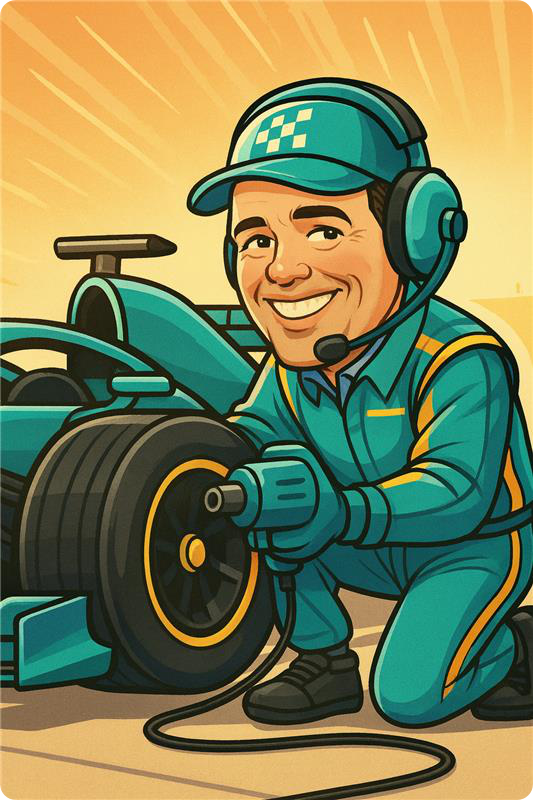
AI generated Anthony creating 2.5 seconds of precision magic
Here are five leadership lessons I took away from watching those 2.5 seconds of magic:
1. Preparation Creates Precision
F1 pit stops only look effortless because they’ve been practiced hundreds (even thousands) of times. Every move is intentional. Every motion is refined.
Leadership takeaway:
When we prepare well, we don’t have to scramble. Teams that invest in training, repetition, and process create performance that feels natural and consistent. In tough times, we rely on our preparation to get us through.
2. Clear Roles Make Everything Faster
During a pit stop, 20 or more people each perform one exact job. One person removes a tire. One tightens a single nut. One operates the front jack. No one swaps roles. No one freelances.
Leadership takeaway:
Clarity creates speed. When team members understand their role, the expectations, and how they support one another, they can execute with confidence instead of hesitation.
3. Trust Eliminates Bottlenecks
Pit crews don’t have time to double-check one another. Each person trusts the others will execute their job perfectly. One moment of doubt slows the entire operation.
Leadership takeaway:
When trust is high, teams move faster. Micromanagement, second-guessing, and constant checking slow everything down. Trust empowers people to do their best work.
4. Alignment Reduces the Need for Over-Communication
Pit crews say very little during a stop, because the alignment happened long before the car ever entered the pit lane. Standards, timing, signals, and movement patterns are already known.
Leadership takeaway:
When teams share a clear vision and understand the plan, communication becomes sharper and more efficient. You don’t need 10 meetings to keep everyone aligned. You need shared clarity.
5. Continuous Improvement Creates Excellence
Even after an “ideal” pit stop, crews immediately watch the replay, frame-by-frame, to find micro improvements, a half-second shaved here, a foot placement adjusted there.
Leadership takeaway:
This is the essence of MIBE: Make It Better Every Day. Great teams don’t chase perfection, they chase progress. They look at what’s working, what could be refined, and how to improve the 1% others ignore.
That brief moment watching the Vegas race reminded me that elite performance isn’t loud or complicated, it’s disciplined, clear, and collaborative.
Unlike F1, leadership isn’t about shaving milliseconds off a lap time. It’s about creating a culture where preparation, clarity, trust, alignment, and continuous improvement make people feel confident and capable.
This week, pick one area of your leadership “pit stop” and ask yourself:
What’s a small adjustment I could make today that would help my team move faster, smoother, or with more confidence?
Because the difference between chaos and excellence is rarely a big move, it’s the sum of all the small ones.
Keep MIBE-ing!
Anthony Lambatos
Founder, MIBE Hospitality Leadership Development
Owner, Footers Catering

P.S. You’ll leave feeling confident and capable! Join us at our MIBE Summit January 25th - 27th.